
How to Speed Up Android Phone
How to Speed Up Android Phone 15 Powerful & Easy Tips That Actually Work (2026 Guide)
Introduction
Is your Android phone running slower than it used to? Apps taking longer to open, lag while scrolling, frequent freezes, and poor battery life are common problems that many Android users face over time. Whether you own a Samsung Galaxy, Xiaomi, Redmi, POCO, Vivo, Oppo, Realme, OnePlus, Motorola, or Google Pixel device, performance issues can affect any smartphone. How to Speed Up Android Phone
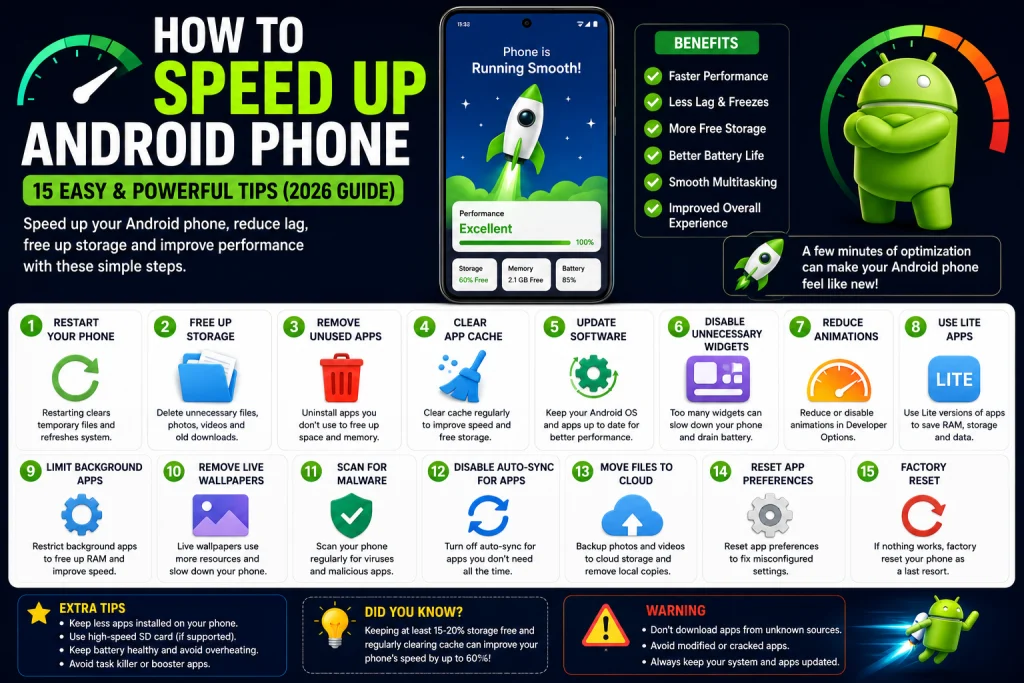
The good news is that you don’t always need to buy a new phone. In most cases, you can significantly improve performance by optimizing your device, removing unnecessary files, and adjusting a few settings.
In this guide, you’ll learn how to speed up Android phone performance using practical and safe methods that work on Android 10, 11, 12, 13, 14, and 15. How to Speed Up Android Phone
Why Android Phones Become Slow
Before fixing the problem, it’s important to understand what causes slow performance.
Common reasons include:
- Low storage space
- Too many background apps
- Outdated software
- Excessive cache files
- Heavy widgets and animations
- Malware or suspicious apps
- Old hardware
- Large downloads and media files
Identifying the cause helps you choose the right solution.
1. Restart Your Phone Regularly
One of the easiest ways to improve performance is simply restarting your device.
A restart:
- Clears temporary memory
- Stops unnecessary background processes
- Refreshes system resources
- Fixes minor glitches
Try restarting your phone at least once every few days.
2. Free Up Storage Space
Low storage is one of the biggest reasons Android phones slow down.
Check Storage
Go to:
Settings → Storage
Delete:
- Unused apps
- Large videos
- Duplicate photos
- Downloaded APK files
- Old screenshots
For best performance, keep at least 15–20% of your storage free.
3. Remove Unused Applications
Many apps continue running in the background even when you don’t use them.
Review installed applications and uninstall anything you no longer need.
Benefits include:
- More storage
- Less background activity
- Better battery life
- Improved performance
4. Clear App Cache
Apps store temporary data called cache.
Over time, cache can consume significant storage and affect performance.
Clear Cache
- Open Settings.
- Tap Apps.
- Select an app.
- Open Storage.
- Tap Clear Cache.
Focus on browsers, social media apps, and streaming applications.
5. Update Android Software
Software updates often include:
- Performance improvements
- Bug fixes
- Security patches
- Battery optimizations
Check for Updates
Go to:
Settings → System → Software Update
Install any available updates.
6. Disable Unnecessary Widgets
Widgets constantly refresh information on your home screen.
Too many widgets can consume:
- RAM
- Battery
- Processing power
Keep only the widgets you actually use.
7. Reduce Animations
Android animations make the interface look smooth but can slow older devices.
Enable Developer Options
- Open Settings.
- Tap About Phone.
- Tap Build Number several times.
- Open Developer Options.
Reduce:
- Window Animation Scale
- Transition Animation Scale
- Animator Duration Scale
Set them to 0.5x or disable them completely.
8. Use Lite Versions of Apps
Many popular apps offer lightweight versions.
Examples include:
- Facebook Lite
- Messenger Lite
- Instagram Lite
- Google Go
Lite apps use less:
- RAM
- Storage
- Mobile data
They are ideal for budget Android devices.
9. Disable Background Apps
Too many apps running simultaneously can reduce performance.
Restrict Background Activity
- Open Settings.
- Select Apps.
- Choose an app.
- Open Battery Settings.
- Restrict background activity.
This helps free up memory and processing power.
10. Remove Live Wallpapers
Animated wallpapers may look attractive, but they consume resources.
Switch to a static wallpaper for:
- Better performance
- Improved battery life
- Smoother navigation
11. Scan for Malware
Malicious apps can slow down your phone dramatically.
Warning signs include:
- Unexpected ads
- Fast battery drain
- Device overheating
- Random pop-ups
Use:
- Google Play Protect
- Trusted antivirus software
Remove suspicious apps immediately.
12. Disable Auto-Sync for Unnecessary Apps
Many apps constantly sync data in the background.
Examples:
- Email apps
- Cloud storage
- Social media
Disable syncing for services you don’t need.
This reduces background activity and improves speed.
13. Move Photos and Videos to Cloud Storage
Media files often occupy most of your storage.
Use cloud services to store:
- Photos
- Videos
- Documents
After backing up your files, remove local copies to free storage.
14. Reset App Preferences
Misconfigured app settings can affect performance.
Reset App Preferences
- Open Settings.
- Tap Apps.
- Open the menu.
- Select Reset App Preferences.
This restores default settings without deleting personal data.
15. Factory Reset (Last Resort)
If your phone remains slow despite trying everything else, a factory reset may help.
Before Resetting
Back up:
- Photos
- Contacts
- Documents
- Videos
Reset Device
Settings → System → Reset → Factory Data Reset
A fresh installation often restores near-original performance.
Additional Tips for Faster Android Performance
Keep Fewer Apps Installed
The fewer apps your phone manages, the better it performs.
Use High-Speed Storage
If your phone supports microSD cards, choose a high-quality card.
Avoid Task Killer Apps
Most modern Android devices manage memory automatically.
Task killer apps often do more harm than good.
Keep Battery Healthy
A degraded battery can indirectly affect performance.
Avoid:
- Extreme heat
- Cheap chargers
- Constant overcharging
Signs Your Phone May Need an Upgrade
Sometimes software optimization isn’t enough.
Consider upgrading if:
- Apps frequently crash
- Storage is permanently full
- Android updates are no longer available
- The device is more than 5–6 years old
- Performance remains poor after a factory reset
- How to Speed Up Android Phone
Frequently Asked Questions
Why is my Android phone so slow?
Common causes include low storage, too many background apps, outdated software, excessive cache files, or malware.
Does clearing cache improve speed?
Yes. Clearing cache removes temporary files that can slow apps and consume storage.
Is factory reset safe?
Yes, but it erases all data. Always create a backup before resetting.
Do antivirus apps speed up Android?
They can help if malware is causing performance issues, but they won’t dramatically improve speed on a healthy device.
How much free storage should I keep?
For smooth performance, keep at least 15–20% of your storage available.
Conclusion
Learning how to speed up Android phone performance can help you extend the life of your device and improve your daily experience. Simple actions such as freeing storage, removing unused apps, clearing cache, reducing animations, and updating Android can make a noticeable difference. How to Speed Up Android Phone
You don’t need expensive tools or technical knowledge to improve performance. By following the 15 proven methods in this guide, you can reduce lag, improve responsiveness, and enjoy a faster Android experience in 2026 and beyond. How to Speed Up Android Phone